Confession: I am basically posting this for good form, because it is a documentary that I saw, and thus feel obligated to include it in the series. (Plus, duh, I like bragging about all these awesome films I’m seeing. Aren’t you tempted to move to Montreal now so you can watch great documentaries and go to jazz festivals and, oh man, just wait ’til you see the book festival coverage I’m going to throw your way…they’re doing a spotlight on Haitian authors this year…I know, right?)
Alexandra Sicotte-Lévesque directed this film, which is confusingly titled “A jamais, pour toujours” in French and “The Longest Kiss” in English. The latter refers to a pronouncement that the Nile River joins (sort of?) Sudan to the newly created South Sudan, in a long goodbye kiss. Which is beautiful. The narration that went along with the film (we never have any idea who is speaking it) is a wonderful poetic reflection on the history of Sudan’s conflicts and the recent secession of South Sudan. Another beautiful thing: the cinematography. The webpage description (and I’m endlessly fascinated by these) describes the film as a “an essential look at an often misunderstood and tragically ignored country.” I would say that for all of the random media flashes we get that loudly proclaim the “genocide” and “chaos” and “cautious optimism” and “tribal clashes” and many other things that you typically hear about African countries in the news, it is, indeed, necessary to stop for a minute and see an intelligent exploration of how people are going about their daily lives in current Sudan and South Sudan. Yes, people are killed, and violence disrupts an entire country, but there are people who live as well. And that seems to be the goal of this film – to show that people continue to live.
It begins with the story of a young man’s broken heart and his role as “adviser” on a radio show dedicated to solving people’s romantic problems. Then there is a woman whose mother is Muslim and whose father is Christian, struggling against prejudice in Khartoum. A doctor who chooses to cover herself completely except for the eyes follows. One of the refugees from the 80’s who returned to become a medical practitioner and then was voted into Parliament tells her story of growing up in Cuba. There is a little boy who was adopted by a Spanish family in Juba after his village was attacked and pillaged. These are GREAT stories. However, in the goal of showing people living instead of concentrating on things like death tolls, we have essentially no idea what these people have survived for the last 30 years and continue to survive.
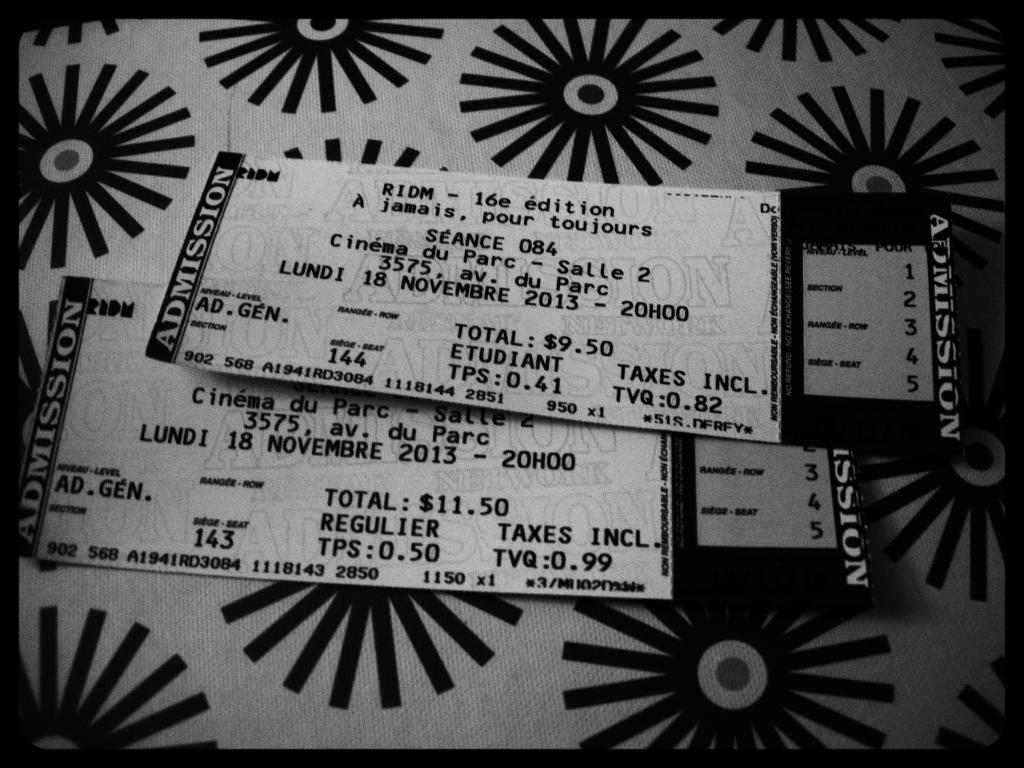
This documentary’s purpose was a bit unclear. As I’ve said, my impression is that it was meant to be a “human interest story” in which personal accounts of daily life in Sudan are favored above explanations of the tumultuous political situation. Except that every once in awhile, the screen fades to black and flashes (very quickly I might add) a serious of chronological facts about the recent history of the country – meaning, events that took place from 1989-2013. Unfortunately, these events seemed to have been randomly chosen and only vaguely related to the stories on which most of the film concentrated.
I have to admit, the reason I dragged myself and my husband out on a dreary, cold Monday night to see the film in the first place was that we both read Dave Eggers’ What is the What this summer. Which was brilliant. So now, obviously, we’re both experts on Sudan’s history. Well…no…which was exactly why we wanted to see the documentary. To…you know…learn things.
Are you reading this, director Alexandra Sicotte-Lévesque? I highly doubt it, but if so, I hope that doesn’t sound like too much of a criticism. Major props for making a documentary about a place that really doesn’t get enough good coverage in the news, but dude…I was a little overwhelmed. Any single story line out of those many which were thrown upon the screen could have made for a fascinating documentary, exploring not only a family’s or an individual’s struggle through war and triumph through everyday life in Sudan, but could have also explained an extremely complicated political situation to a bunch of people who might not know the first thing about Sudan. (I mean…c’mon…most people haven’t even read What is the What…)


 Bronwyn Averett
Leave a comment